The first question on almost every call is the same: what is this going to cost? A price list cannot answer that honestly, because two rugs the same size can be completely different jobs. So instead of a range, here is one real job from a Chicago-area home — three line items, one invoice, and the reasoning behind each number.
Key Takeaways
- This job came to $146: in-home cleaning of a synthetic area rug ($56), a pet stain treatment on a Persian rug ($50), and a dog bed ($40).
- Fiber moves the price more than people expect. Synthetic rugs are usually the least expensive to clean because they handle water well and their color stays put.
- A pet stain treatment targets specific spots. If urine has soaked into a rug’s foundation, the lasting fix is a full wash, not a spot treatment.
- Clean the dog bed in the same visit. A clean rug next to a dirty bed smells like dog again within days.
- These figures are one real example, not a price list. Every rug gets a free estimate and a quote before any work starts.
The Job: Two Rugs and a Dog Bed
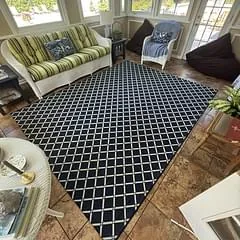
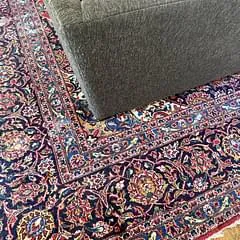
One household, three things to clean. In the sunroom, a black-and-white trellis rug covering most of the tile floor — a synthetic-fiber rug that simply needed a proper clean. In the living room, a Persian rug with pet spots. And the dog bed belonging to the most likely suspect.
All of it was done in the customer’s home, in a single visit. Nothing had to be rolled up and taken away, and that is part of why the total stayed where it did.
The Invoice, Line by Line
| Service | What it covered | Price |
|---|---|---|
| Area rug cleaning — synthetic fiber | Sunroom rug cleaned in place, in the customer’s home | $56 |
| Pet stain treatment | Pet spots on the living room Persian rug, located and treated | $50 |
| Dog bed cleaning | Large floor-cushion dog bed | $40 |
| Total | $146 |
Those were the three services on the job. Before any of it started, the customer knew what each line would cost — that is how every job works here: a free estimate, a quote before work begins, and no hidden fees afterwards. The rest of this post is what sits behind each of those three numbers.
Why the Synthetic Rug Was $56
Synthetic rugs are made from fibers like polypropylene (olefin), nylon, and polyester. The Carpet and Rug Institute points out that each fiber type brings different stain and soil resistance, colorfastness, and ease of cleaning, and that difference is most of the story behind this price.
Polypropylene, the most common synthetic in area rugs, is usually solution-dyed: the color is added to the fiber while it is being made, so it runs all the way through rather than sitting on the surface. That means very little risk of dye bleeding when the rug gets wet. Synthetic fibers also absorb far less water than wool, so they dry faster and do not need a controlled drying room.
Put those together and a synthetic rug can be cleaned right where it lies. This one was done in place in the sunroom — no pickup, no drying room, no return trip. That is labor and handling the customer does not pay for, and it is why this was the least expensive line on the invoice even though it was the biggest thing we cleaned.
What a synthetic rug does not do is repel dirt forever. Oily soil clings to synthetic fiber, and a light-colored rug in a sunroom shows traffic lanes quickly. Cleaning it before the soil gets ground in is what keeps the job at this level.
Finding the Pet Spots on the Persian Rug
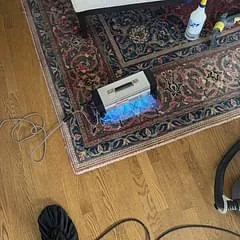
Dried urine is often invisible in daylight, especially on a busy, dark Persian pattern like this one. What you notice is the smell, and the smell does not tell you where it is coming from. So before anything was treated, the rug was checked under ultraviolet light, which makes many urine residues glow and shows exactly which spots need work.
That order matters. The ANSI/IICRC S100 standard — the industry reference for professional cleaning of carpets and rugs — treats pre-cleaning inspection as a step in its own right, alongside spot and stain removal. Treating the spots you can see and missing the ones you cannot is how an odor survives a cleaning.
Urine also rarely stays in the rug. This Persian sits on a hardwood floor, and whatever soaks through the pile reaches the rug pad and the hardwood underneath next. Lifting a corner and checking the pad and floor is part of finding the source, not an extra.
If you want the long version of why urine is so much harder to remove than it looks, our page on pet urine accidents on rugs goes through it step by step.
What the $50 Pet Stain Treatment Covers — and What It Does Not
A pet stain treatment is targeted work on the spots found during inspection: breaking down the urine residue where it sits and extracting it, rather than covering it with fragrance. For fresh or shallow accidents on the pile, that is often the right-sized fix, and it is why this line was $50 rather than the price of a full wash.
It has limits, and we would rather say them up front:
- Urine in the foundation. A hand-knotted rug is pile on top of a dense foundation. Once urine has soaked all the way down and dried into salts, a spot treatment reduces it but cannot flush it out. That needs a full odor removal wash with the rug submerged at our facility.
- Color damage. Old urine can shift or strip dye permanently. Cleaning removes the contamination; it does not put color back. That is a separate job — color repair for pet-stained rugs.
- Repeat accidents. If the same spot keeps getting hit, treating the rug without solving why the pet goes there means paying for the same treatment again.
Which brings us to the third line.
Why the Dog Bed Was on the Same Invoice ($40)
Dogs return to places that smell like them. The San Francisco SPCA’s advice on urine marking in dogs is to clean previously marked things with an enzymatic cleaner to remove any trace of urine smell that might draw the dog back. A dog bed is the most dog-scented object in the house.
It is also where hair, dander, skin oils, and whatever came in on the paws collect every night. Clean the rugs and leave the bed as it is, and the room smells like dog again within days — with the dog carrying it straight back onto the clean pile. For anyone in the house with allergies, the EPA lists pet dander as an asthma trigger and recommends keeping pets away from carpets and upholstered furniture, which a clean bed of their own makes a lot easier.
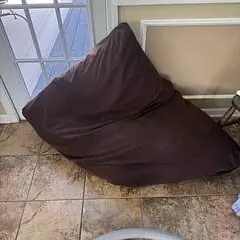
This one was a large floor-cushion style bed, the kind that is awkward to wash at home. At $40 it was the smallest line on the invoice, and arguably the one that protects the other two.
When a Rug Can Be Cleaned in Your Home — and When It Should Not
This job worked in-home because of what was in the house. The honest split looks like this.
Good candidates for in-home cleaning:
- Synthetic area rugs with everyday soil, like the sunroom rug.
- Targeted pet stain treatment on spots that have not gone deep.
- Dog beds and similar items cleaned in the same visit.
Rugs that should come to our facility:
- Hand-knotted wool and silk rugs that need a full wash — the work behind our Persian and Oriental rug cleaning.
- Any rug with urine in the foundation, or an odor that has come back after cleaning.
- Rugs with unstable dyes, moth damage, or fringe and edges that need repair.
For those, the rug is dusted, washed, rinsed, and dried under control in our own facility — the full-wash cleaning process step by step. Pickup and delivery are free across Chicago and the nearby suburbs, so the choice comes down to what the rug needs, not what is more convenient.
What Moves an Area Rug Cleaning Price Up or Down
If you are comparing this job to your own rugs, these are the things that actually change the number:
- Fiber. Synthetic is usually the least expensive to clean. Wool takes more care, and silk more still.
- Size. More square footage is more work, but it is rarely the biggest factor on its own.
- Construction. Hand-knotted, hand-tufted with a glued backing, flatweave, and machine-made rugs all clean differently.
- Contamination. A few surface spots and urine through the foundation are completely different jobs.
- Dye stability. Colors that might run mean slower, more careful work.
- Where the work happens. In-home cleaning or a full wash at the facility.
- Repairs. Fringe, edges, holes, or color work are quoted separately from cleaning.
This is why we quote after seeing the rug, or at least a good photo of the front and back, rather than from a price-per-foot table.
From Our Side: Why We Put a Real Invoice in a Blog Post
Most rug cleaning pricing online is a range wide enough to mean nothing. We would rather show you a real invoice and explain it. The same house had a rug that could be cleaned in place for $56 and a Persian rug where the right answer depended on how deep the urine had gone. Telling those two apart is the actual job, and a price list skips it.
We are a family-owned Chicago business. Everything is handled by our own team — in your home when the rug allows it, in our own facility when it does not, and never shipped out to a third party. We use safe, green cleaning products, and we will tell you when a treatment is enough and when it is not before you pay for either.
When You Do Not Need Us
Some of this you can handle yourself, and it is worth saying so.
- A fresh spill on a synthetic rug. Blot it right away with a clean white cloth, rinse with a little plain water, and blot dry. Do not scrub. Most fresh spills come out of synthetic fiber completely.
- A dog bed with a removable, washable cover. Machine wash the cover with regular detergent and a little baking soda. You do not need to pay us for that.
- Routine care. Vacuum both sides, rotate the rug, and keep a pad under it — the basics of area rug care between professional cleanings stretch the time before you need anyone.
Call us when a smell comes back after it dries, when a spot reappears a few days later, or when the rug is hand-knotted and the accident was urine.
Want to know what your own rugs would cost? Send a photo of the front and back, tell us roughly the size and what happened to it, and we will give you a straight answer. Estimates are free with no obligation, and every cleaning job includes free pickup and delivery across Chicago, Evanston, Oak Park, Naperville, and Schaumburg. Call (224) 395-3525 or request a free estimate.
FAQ
How much does area rug cleaning cost in Chicago?
It depends on the fiber, size, construction, and how contaminated the rug is, which is why we quote after seeing the rug rather than from a price table. As one real example, a recent job in a Chicago-area home came to $146: $56 to clean a synthetic area rug in the customer’s home, $50 for a pet stain treatment on a Persian rug, and $40 to clean a dog bed. Estimates are free, you get a quote before any work starts, and there are no hidden fees afterwards.
Can you clean an area rug in my home instead of taking it away?
Often, yes. Synthetic rugs with everyday soil, targeted pet stain treatments, and items like dog beds can usually be done in your home in one visit, as they were on the job described here. Hand-knotted wool or silk rugs that need a full wash, or any rug with urine soaked into its foundation, should come to our facility, where they can be submerged, rinsed, and dried under control. Pickup and delivery are free.
Is a pet stain treatment enough for a Persian rug?
For fresh or shallow spots on the pile, a targeted treatment is often enough. Once urine has soaked into the foundation of a hand-knotted rug and dried into salts, a spot treatment reduces it but cannot flush it out, and the odor tends to return on humid days or when the room warms up. That needs a full submersion wash. If the urine has also changed the dye, cleaning will not restore the color; that is a separate color repair job.
Why should I clean the dog bed at the same time as the rug?
Because the bed is where hair, dander, oils, and dog smell collect, and dogs are drawn back to places that smell like them. If you clean the rugs and leave the bed, the room smells like dog again within days and the dog carries it back onto the clean rug. Cleaning both in one visit protects the rug cleaning you just paid for.
Why is cleaning a synthetic rug cheaper than cleaning a wool Persian?
Polypropylene, the most common synthetic in area rugs, is usually solution-dyed, so the color runs through the fiber and is unlikely to bleed, and synthetic fibers absorb far less water than wool, so they dry quickly. That means a synthetic rug can often be cleaned where it lies. A hand-knotted wool rug needs more careful handling, dye testing, and controlled drying, and a full wash happens at our facility.