Most people assume a rug with faded colors, a pet stain, worn fringe, or a moth hole is ruined. It usually isn’t. This is a look inside our family-owned Chicago workshop — and the real before-and-after transformations behind the rugs other people were ready to throw away.
Key Takeaways
- Cleaning, repair, and restoration are three different things: cleaning refreshes, repair fixes physical damage, and restoration rebuilds lost color and structure.
- Faded and bleached color, worn or missing fringe, pet-stain discoloration, moth holes, and unraveling ends are all repairable while the foundation is still sound.
- We are a family-owned Chicago business, and every repair and restoration is done by hand in our own workshop — not shipped out or rushed.
- Good restoration is meant to be invisible: we color match, reweave, and rebuild fringe to blend into the original rug.
- Every job includes free pickup and delivery across Chicago, and we always inspect and quote before any work begins.
“Is My Rug a Lost Cause?” — Usually Not
It’s the question we hear most often. A rug gets a stubborn stain, the sun bleaches one side, the dog has an accident, or the fringe frays down to nothing — and the owner quietly assumes it’s finished. Then they find out how much a comparable hand-knotted rug costs to replace, and they start looking for another option.
That other option is repair and restoration. A well-made rug is built to last generations, and the damage that looks fatal is very often reversible. Over the years we’ve brought back rugs with faded colors, deep pet-stain damage, moth holes, and ends that were coming apart entirely. In this post we’ll walk you through what’s actually possible, show you real examples from our own work, and explain how we do it — a bit of a behind-the-scenes tour of our family-owned business.
Cleaning vs. Repair vs. Restoration: What’s the Difference?
These three words get used interchangeably, but they’re very different jobs:
- Cleaning removes dirt, stains, and odor from a rug that is structurally sound.
- Repair fixes physical damage — worn or missing fringe, loose or unraveling sides and ends, holes, and pulled foundation threads. Rebuilding that structure by hand is the heart of professional rug repair.
- Restoration goes furthest of all: rebuilding what age or damage took away. That means re-dyeing faded and bleached color, reweaving missing pile, and returning an antique or heirloom rug as close as possible to how it originally looked.
Many rugs need a combination. A pet accident, for example, often needs cleaning to remove the stain, odor neutralizing at the source, and color repair to fix the discoloration the urine left behind. Knowing which is which is the first thing we sort out when your rug arrives.
Where the Transformations Happen: Inside Our Workshop
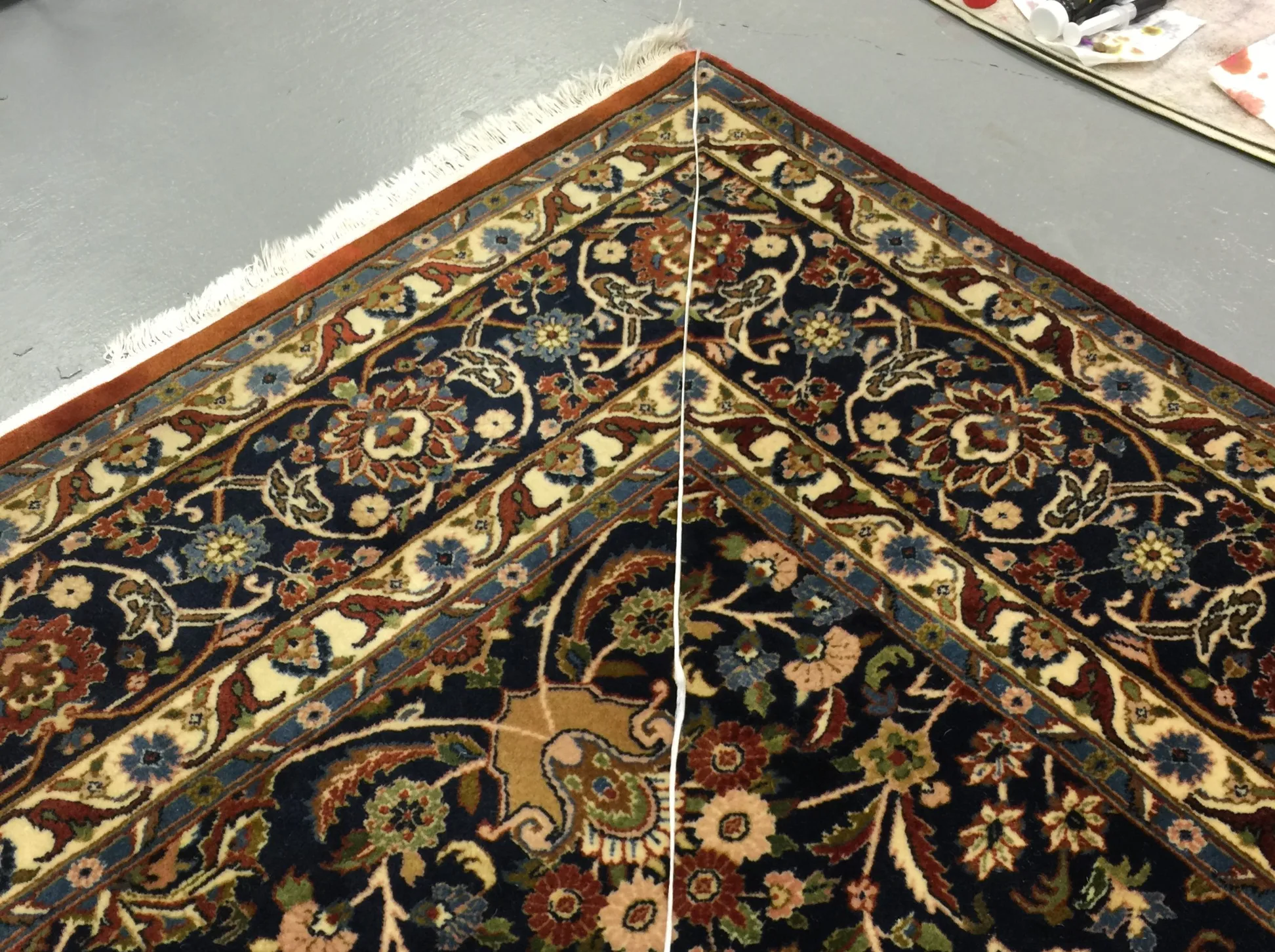
We’re a family-owned business, and that shapes how we work. Every rug is handled by our own team, in our own facility — nothing is shipped off to a third party or run through a machine and sent back. We treat every rug as if it were our own, and for the heirloom and antique pieces people bring us, that matters.
Our team has years of hands-on experience with everything from old Persian and oriental rugs to modern area rugs, and we keep learning new techniques while sticking to safe, green cleaning products. The repair and restoration skills — hand re-dyeing, reweaving, fringe work — are the kind of craft that takes years to do well, and it’s where we’re happiest. There’s nothing quite like handing back a rug the owner had written off.
Before & After #1: Bringing Faded Color Back to Life
Sunlight is beautiful and merciless. A rug that sits by a window for years slowly loses its color on the exposed side, until one half looks washed out next to the other — a breakdown in the dye’s lightfastness. Spills, harsh DIY cleaners, and simple age do the same thing. Cleaning can’t fix this — there’s no dirt to remove; the dye itself is gone.
Color restoration puts it back. We identify the original hues, mix color-safe professional dyes to match, and hand-apply new color into the faded areas, blending it into the surrounding pattern so there’s no visible line between old and new. The before-and-after above is exactly this kind of sun-fading correction. Done right, the rug simply looks like itself again — the kind of hand re-dyeing at the core of our rug color restoration service.
Before & After #2: Pet Stains and the Damage Underneath
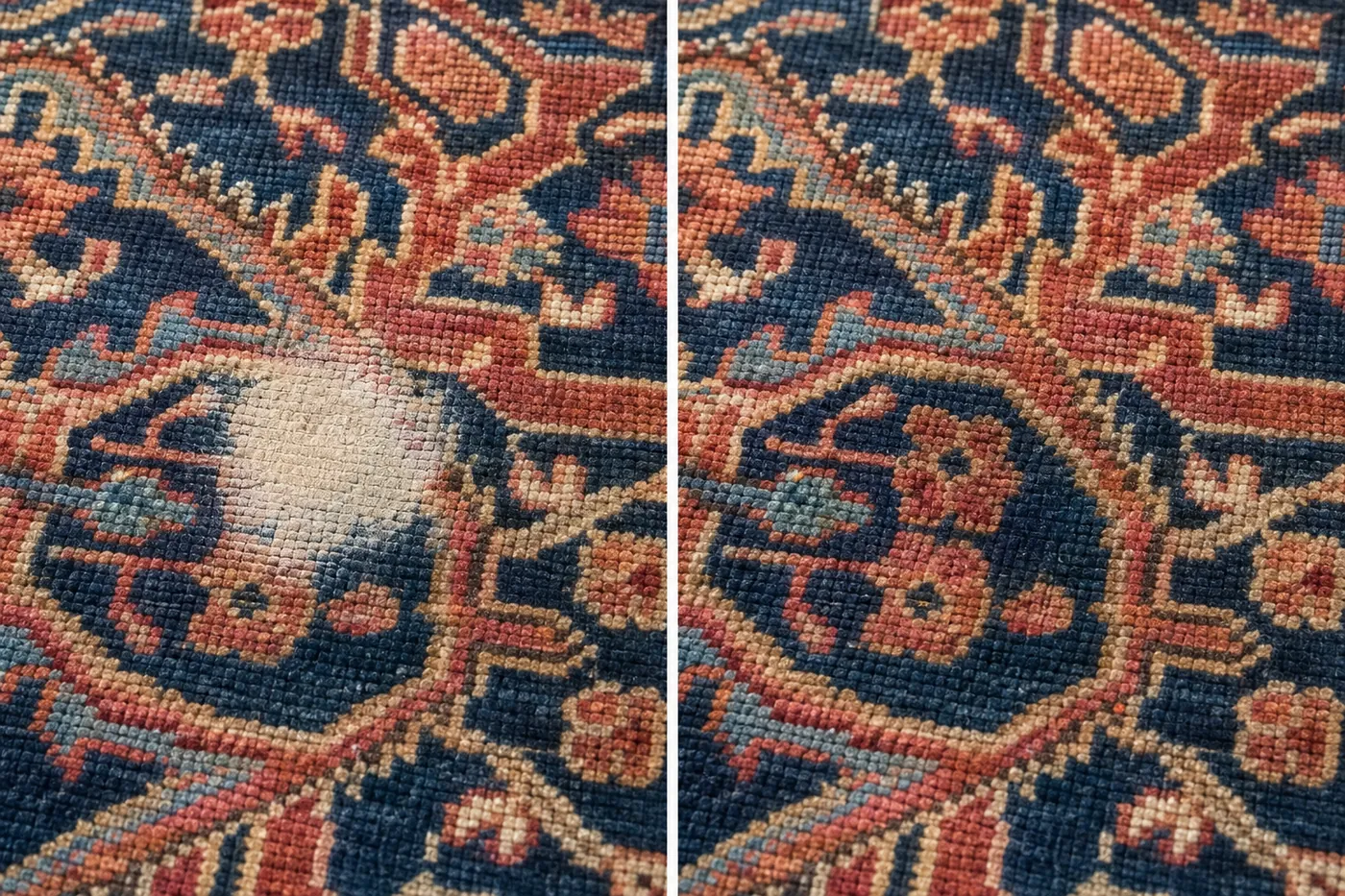
Pet accidents are one of the most common reasons people call us — and one of the most misunderstood. Most owners think the problem is the stain and the smell. Often the deeper problem is color: pet urine is acidic when fresh and turns alkaline as it dries, and that swing attacks the dyes, leaving a yellow, brown, or bleached patch that stays behind even after the stain is gone.
That’s a two-part fix. First we deep clean the area and neutralize the urine salts at the source, so the smell can’t come back. Then we color match and re-dye the discolored spot by hand so it disappears into the pattern. The image below shows a bleached pet-stain spot re-dyed and blended back into the rug’s design.
A quick warning from experience: store-bought spot removers and peroxide are the number-one cause of the permanent bleached patches we repair. If your pet has an accident, blot it and call a professional before reaching for a strong cleaner. We walk through the whole process in our guide to repairing pet stain color damage on rugs.
Before & After #3: Rebuilding Worn and Missing Fringe
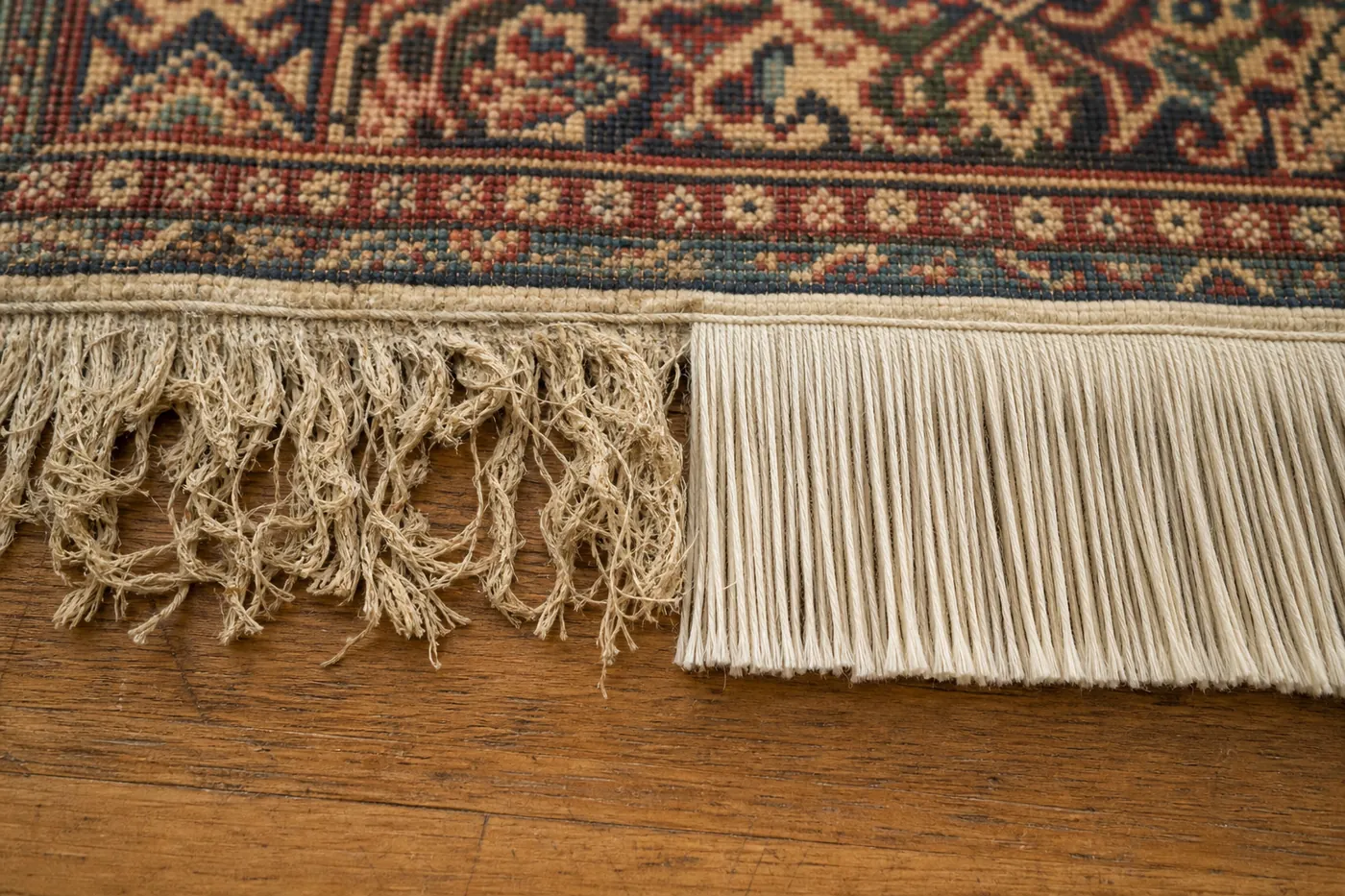
On a hand-knotted rug, the fringe isn’t a decorative trim — it’s the exposed end of the warp foundation the entire rug is woven onto. So when the fringe frays and wears away, it’s not just cosmetic: the end of the rug can start to unravel into the pile itself.
We secure the end with a hand-sewn stop so it can’t come apart further, rebuild any lost foundation threads, and then repair or replace the fringe by hand — matching the fiber, color, and thickness of the original so the finished end blends in. The photo below shows a damaged, frayed fringe on one side against a neatly restored fringe on the other.
One thing we’ll always tell you: please don’t trim, glue, or tape a frayed fringe at home. Cutting removes the safety margin and lets the knots unravel, and glue stiffens, yellows, and tears the fibers when it fails — all of which make a proper repair harder. Learn how we rebuild worn ends in our guide to rug fringe repair and replacement.
Before & After #4: Moth Holes and Reweaving
Moths don’t eat the rug you see — the larvae of the common clothes moth quietly eat the wool from underneath, often beneath furniture or in a closet where a rug sits undisturbed. By the time you notice, you may have bare patches, thin worn areas, or actual holes.
The fix is two steps. First, professional moth treatment for rugs to kill any active infestation and stop the damage from spreading. Then reweaving: rebuilding the foundation and knotting new wool into the missing area by hand, matching the color and weave so the repair disappears into the surrounding pattern. It’s slow, patient work, but it can bring back a rug that looked beyond saving.
How We Approach Every Repair and Restoration
No two damaged rugs are the same, but the process always starts the same way — with a careful, honest inspection. Here’s how a typical repair or restoration goes:
- Inspection & assessment. We check the fiber, dye stability, construction, and the extent of the damage, and decide what the rug actually needs — cleaning, repair, restoration, or a combination.
- Cleaning first. Most repairs start with a proper clean through our five-step rug cleaning process, so we’re working on a fresh rug and can see the true colors we need to match.
- Stabilize and repair. We secure loose ends, rebuild foundation, reweave holes, and repair or replace fringe by hand.
- Restore color. Where color is faded, bleached, or stained, we color match and hand re-dye the affected areas to blend with the original.
- Final detailing & quality check. We groom, inspect the match in different light, and only then wrap and return your rug.
Crucially, we inspect and quote before any work begins. You’ll always know what can be restored, what it will cost, and how long it will take — no surprises.
Can Your Rug Be Saved? Signs That Say Yes
A rug is usually a strong candidate for repair or restoration when:
- The foundation (the base the rug is woven on) is still intact, even if the pile or fringe is worn.
- The fibers are natural — wool and silk take dye and reweaving beautifully.
- The damage is localized: a stain, a hole, a faded side, a worn end — rather than the whole rug disintegrating.
- It’s a piece with value to you, whether that’s money, craftsmanship, or sentiment.
Even when damage is extensive, it’s worth an inspection before you give up on it. We’ve saved rugs that owners were certain were ruined — and the honest truth is we’ll also tell you when a rug isn’t worth the cost of restoration, because trust matters more to us than one job.
How to Protect Your Rug After a Restoration
Once we’ve brought a rug back to life, a few simple habits keep it that way for years and delay the next repair:
- Rotate it once or twice a year. Turning the rug 180 degrees evens out foot traffic and sun exposure, so one side doesn’t wear thin or fade faster than the other.
- Use a quality rug pad. A proper pad cushions the pile against grinding foot pressure, stops slipping, and lets air move underneath — which also discourages the moths and mildew that thrive under a rug pressed flat to the floor.
- Manage direct sunlight. Sheer curtains, blinds, or UV-filtering window film dramatically slow the fading that undoes color restoration. If a rug sits in a bright bay window, rotating it becomes even more important.
- Act fast on spills and accidents. Blot — never rub — with a clean white cloth and cool water, and skip the store-bought “pet” and oxygen cleaners that cause the bleached patches we so often repair. When in doubt, call us before the stain sets.
- Vacuum gently and often, but never the fringe. Regular low-suction vacuuming pulls out the gritty soil that cuts wool fibers from the inside. Keep the beater bar off the fringe, which tangles and tears easily.
- Have it professionally cleaned every one to three years. Deep-seated grit is the main thing that wears a rug out. A periodic professional wash removes what home vacuuming can’t and gives us a chance to catch small problems — a loosening end, an early moth sign — before they become big repairs.
None of this is complicated, and it protects the investment you just made in restoring the rug. If you’re ever unsure whether something you’re seeing is normal wear or the start of a problem, send us a photo and we’ll tell you.
Why Trust Us With an Heirloom
Handing over a rug that’s been in your family for decades takes trust. We earn it the same way with every customer: clear pricing with no hidden fees, careful handling of every piece, and open communication from pickup to delivery. We serve homes and businesses across Chicago and the nearby suburbs — Evanston, Oak Park, Naperville, Schaumburg — and every job comes with free pickup and delivery.
If you’ve got a rug you love but had given up on, let us take a look before you replace it — call (224) 395-3525 or request your free quote, and we’ll tell you honestly what can be brought back to life.
FAQ
What is the difference between rug cleaning, rug repair, and rug restoration?
Cleaning removes dirt, stains, and odor and refreshes a rug that is structurally sound. Repair fixes physical damage — worn or missing fringe, loose sides, holes, and unraveling ends — so the rug is whole and stable again. Restoration goes further and rebuilds what age or damage took away, including re-dyeing faded or bleached color, reweaving missing pile, and returning an antique or heirloom rug as close as possible to its original state.
Can a badly damaged, faded, or antique rug really be saved?
Very often, yes. As long as the foundation and fibers are still sound, we can re-dye faded and bleached areas, rebuild worn fringe and loose ends, reweave moth holes and thin spots, and neutralize set-in odors. We always inspect first and tell you honestly what can be restored before any work begins.
How do you match the original colors and fringe so the repair is invisible?
We color match by hand, mixing color-safe professional dyes to the exact hue, tone, and depth of the surrounding pattern and feathering new color into the design so there is no visible edge. For fringe and reweaving we match the fiber, color, and thickness of the original and finish it by hand so the repaired area blends into the rest of the rug.
Do you offer free pickup and delivery for rug repair and restoration in Chicago?
Yes. Every job includes free pickup and delivery across Chicago and the nearby suburbs. We collect your rug, do all cleaning, repair, and restoration work at our facility, and return it to your home.
How long does rug repair or restoration take?
A standard clean typically takes several days. Repair and restoration work — reweaving, fringe rebuilding, and hand re-dyeing — takes longer because it is done by hand in stages. After we inspect your rug we give you a clear timeline along with the quote, so you know what to expect before we start.